
16x22x5 Electro-Air Filters for Allergies and Asthma
TL;DR
For allergy and asthma households, a MERV 13 16x22x5 filter is usually the best choice for an Electro-Air media cabinet, because the five-inch depth handles high efficiency without choking airflow. In humid West Palm Beach, change it about every six weeks, not every 90 days.
I write about filters for South Florida homeowners, and the question I hear most from allergy households is why the house still feels dusty after a filter change. My short answer: buy MERV 13 sized to 15.38 x 21.88 x 5.25 inches, make sure it seals, and change it every six weeks.
Key Takeaways
Size: Order by the nominal 16x22x5 label; the actual size is 15.38 x 21.88 x 5.25 inches.
Rating: MERV 13 is the best fit for asthma and year-round allergies in a five-inch cabinet.
My 6-50-13 routine: Change every six weeks, keep indoor humidity under 50 percent, and run MERV 13 if your system allows it.
Cost: Six-week changes run about nine filters, roughly $297 a year.
Limits: A filter supports, but never replaces, your doctor's treatment plan.
What Is a 16x22x5 Electro-Air Filter?
A 16x22x5 Electro-Air filter is a five-inch-deep pleated media filter that slides into an Electro-Air media air cleaner cabinet. The 16x22x5 label is the nominal, rounded size; the actual face size runs slightly smaller so the filter seats in the track, the same reason a 10x30x2 filter actually measures 9.5 x 29.5 inches.
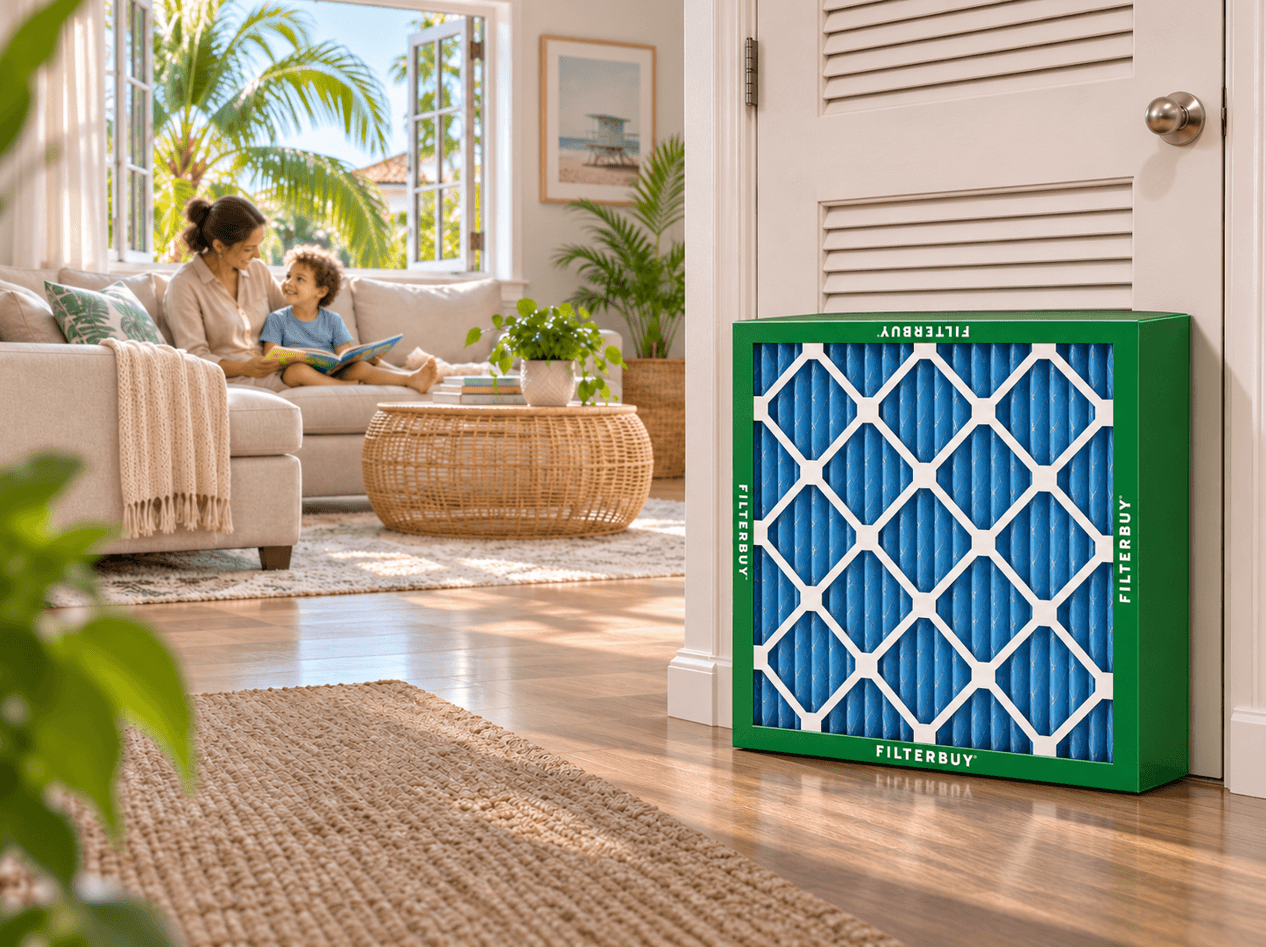
Filterbuy, an air filter manufacturer based in Talladega, Alabama, makes Electro-Air-compatible 16x22x5 replacement filters. According to its product listing, they are five-inch pleated media filters, actual size 15.38 x 21.88 x 5.25 inches, made in the USA in MERV 8, MERV 11, and MERV 13, with a six-week change recommended for homes with asthma or allergies.
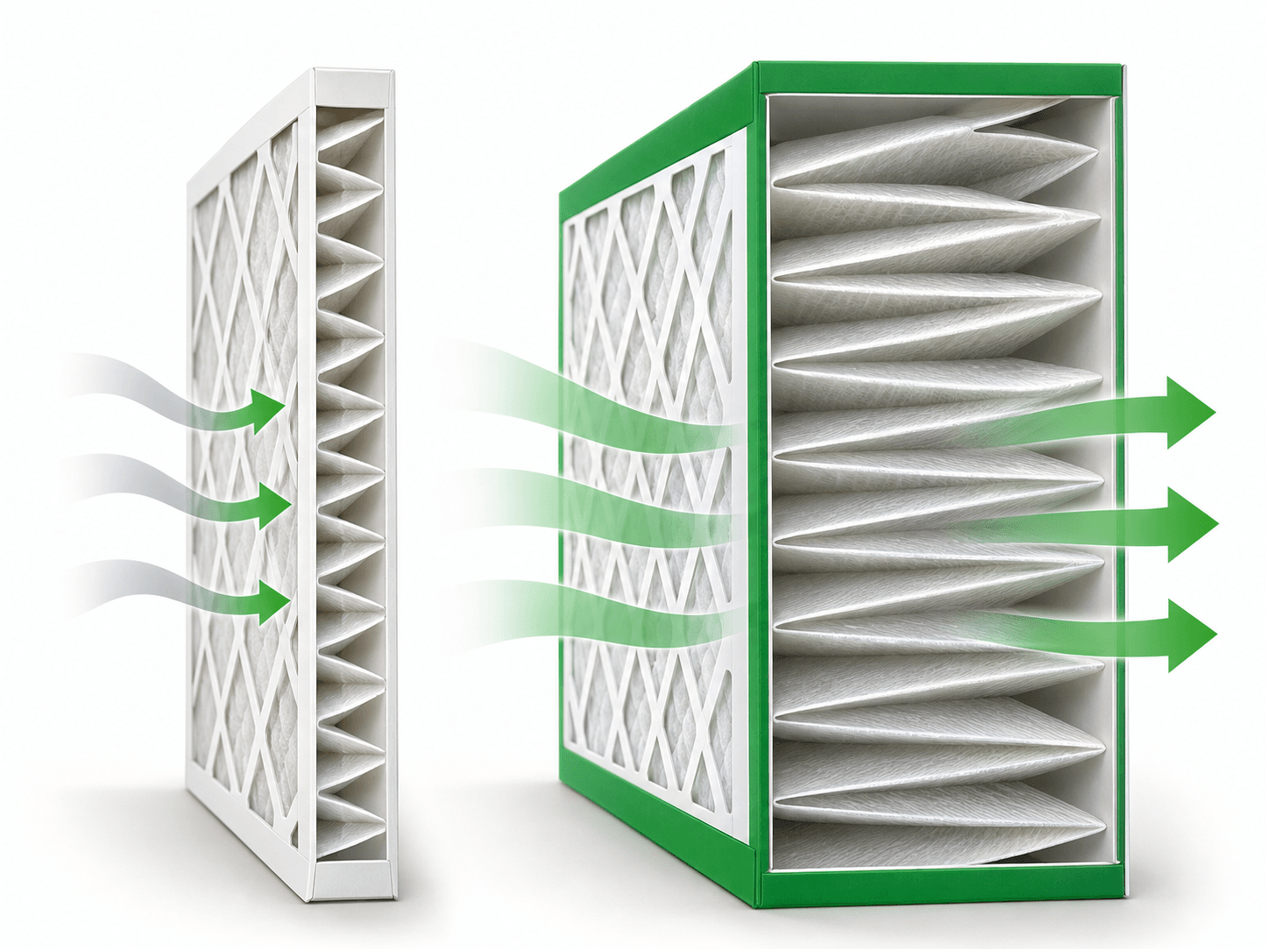
The way I explain it to readers: a one-inch filter pushed to MERV 13 is like breathing through a folded napkin, while a five-inch filter spreads the job across far more pleated media, so air moves easily, and the filter lasts longer.
Which MERV Rating Is Best for Allergies and Asthma?
MERV 13 is the best rating for most allergy and asthma households with a 16x22x5 Electro-Air cabinet. MERV ratings describe how well a filter captures particles between 0.3 and 10 microns, according to the EPA's explanation of MERV ratings.
MERV 8: Captures dust, pollen, dust mite debris, mold spores, and pet dander. I would only stop here for mild, seasonal symptoms.
MERV 11: Adds smoke and smog. My pick for pet homes where MERV 13 makes an older blower noisy.
MERV 13: Adds bacteria-sized particles. My default for asthma, year-round allergies, or burn-season smoke, a scenario this smoke season guide to MERV 13 filters walks through.
When I compared the ratings against these MERV 13 filter guides, the deciding factor was the cabinet: five inches of media removes the usual airflow argument against MERV 13. The EPA suggests at least MERV 13, or as high as your system allows, and the MERV 13 version of the 16x22x5 filter keeps the same actual size, so no cabinet changes are needed.
My two-week MERV 13 test: After upgrading, listen for whistling at the cabinet and feel the farthest supply vent. If airflow there drops noticeably or cycles run longer, step back to MERV 11 and ask for a static pressure check.
Can an HVAC Filter Really Help With Asthma and Allergies?
Yes, a good HVAC filter lowers airborne allergens, but I never call it a cure. The EPA notes HVAC filters only clean while the system runs, and the clearest symptom evidence comes from studies of portable HEPA air cleaners.
What I rarely see explained: MERV 13 captures the 1- to 3-micron droplets that can carry respiratory viruses, per this look at filters for virus protection, but traps rather than destroys them, as this breakdown of filter effectiveness against viruses notes.
A filter cannot reach dust mites in a mattress or mold on a damp wall, so I treat it as the background layer, paired with hot-water bedding washes, pets kept out of bedrooms, and the EPA's asthma trigger control steps. Dusty vents can also undo a good filter, so vent and duct cleaning in nearby Davie belongs alongside keeping a dust-free home.
Why Do West Palm Beach Homes Need Extra Filter Attention?
West Palm Beach homes need extra attention because year-long heat and humidity help mold and dust mites thrive and keep the AC running most of the year. The Florida Department of Health advises indoor humidity below 60 percent, and below 50 percent is best for controlling mold and dust mites.
Our filter calendar runs opposite to colder regions. In California's Central Valley, winter fog keeps furnaces running and filters loading from November through February; here, the heaviest loading comes in summer and early fall.
To make the 6-50-13 routine practical, keep a small digital hygrometer in the main bedroom, away from supply vents, and check it weekly in summer. Anchor one change to June 1, the start of hurricane season, and after any outage, roof leak, or nearby flooding, replace a damp filter rather than drying it.
An aging air handler may call for HVAC replacement in Palm Beach County, and Delaware's multi-zone mini-split rebates show how incentives can offset an upgrade. Seasonal residents with a home in Canada can get Filterbuy's same 16x22x5 MERV 13 filter for Canadian homes, so both houses share one filter standard.
How Often Should You Replace a 16x22x5 Filter in an Allergy or Asthma Home?
Replace a 16x22x5 filter about every six weeks in a home with asthma or allergies. Five-inch filters are often sold as 90-day filters, but I read that label as a best case for a mild climate, not a South Florida summer, and Filterbuy's guidance for allergy homes is also six weeks.
What six weeks really costs: At Filterbuy's listed price of $32.99 per filter when buying four or more, about nine changes a year comes to roughly $297, versus about $132 for four 90-day changes. For an asthma household, I would spend that before any gadget.
The U.S. Department of Energy notes that clogged, dirty filters reduce airflow and cut efficiency, and running the thermostat fan on "On" adds workload, as this HVAC technician's filter checklist explains. Change it sooner if you notice:
Visible loading: Gray pleats across most of the face.
More dust: Surfaces dust up faster between cleanings.
Symptom flares: Indoor sneezing or wheezing gets worse.
Longer cycles: The AC runs longer to cool.
If your home has a second return, Filterbuy sizes such as 16x16x1, 20x20x4, 18x18x1, and 14x24x1 are stocked at Amazon, Walmart, The Home Depot, and Target. Two-inch sizes like 17x20x2 and MERV 13 17.5x23.5x2 have their own guides.
How Do You Install a 16x22x5 Filter Correctly?
A 16x22x5 swap takes about five minutes, and airflow direction and a sealed door matter most.
Turn the system off at the thermostat.
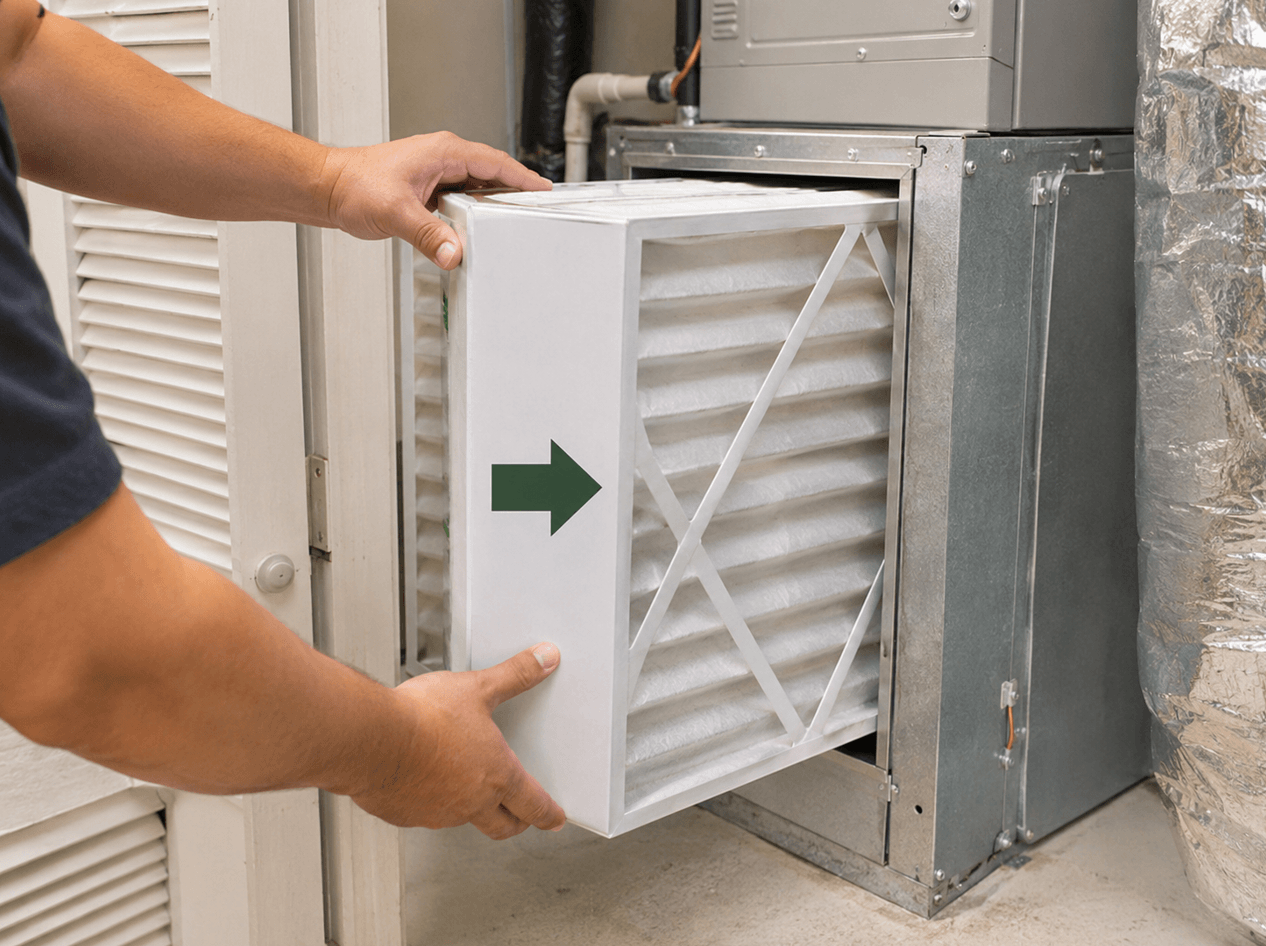
Open the cabinet door and slide out the old filter, noting the airflow arrow.
Check the empty cabinet for dust or moisture, and wipe it clean. I never skip this step, because a damp cabinet in July is an early mold warning.
Slide the new filter in with the arrow pointing toward the air handler.
Close the door fully so the gasket seals, then turn the system back on.
Write the date on the frame and set a six-week reminder.
The bypass check I use: At each change, look at the clean side of the old filter's frame. A dark dust line along the edges means air is slipping around it, usually from a worn door gasket or an undersized filter. If the blower sounds strained after a swap, these heating and air service guides explain what a static pressure visit covers.
"After writing about West Palm Beach filters, I see allergy relief here as a humidity problem first and a filter problem second. Get indoor air under 50 percent, and a MERV 13 five-inch filter finally does its job."
Kristien de Bruijn, Author
Essential Resources
Electro-Air 16x22x5 Replacement Air Filters. This product listing gives the actual dimensions and change schedules for each MERV option.
Guide to Air Cleaners in the Home (EPA): The EPA explains how to choose HVAC filters, why it recommends MERV 13, and how run time limits filtration.
Asthma Triggers (Asthma and Allergy Foundation of America): This page lists the indoor allergens and irritants most likely to set off allergic asthma, including ones a filter cannot reach.
Allergens (National Institute of Environmental Health Sciences) NIEHS explains dust mite, pet, and mold allergens and why source control matters.
Mold (Florida Department of Health): The state health department sets Florida humidity targets and explains when an AC system should be examined.
Indoor Air Pollution (MedlinePlus): The National Library of Medicine summarizes indoor pollutants, including the gases and odors particle filters miss.
Supporting Statistics
27.8 million people in the U.S., or 8.4 percent, currently have asthma. The Centers for Disease Control and Prevention reports this from its 2023 National Health Interview Survey.
9.1 percent of Florida adults have been told by a health professional that they have asthma. America's Health Rankings draws this 2024 figure from CDC Behavioral Risk Factor Surveillance System data.
25.2 percent of U.S. adults have a seasonal allergy. The American Academy of Allergy, Asthma and Immunology publishes this figure in its allergy statistics.
Final Thoughts
In West Palm Beach, the replacement schedule matters as much as the filter. A MERV 13 that fits but sits for 90 days does less for allergies than one changed every six weeks.
Next Steps
Measure: Confirm the nominal and actual size on your current filter.
Test: Run the two-week MERV 13 check after upgrading.
Track: Log humidity weekly and change the filter every six weeks.
Frequently Asked Questions
Is MERV 13 Too Restrictive for My System?
Usually not in a five-inch cabinet. The EPA notes most systems handle MERV 13 when it is changed often, but older systems should get a static pressure check first.
Should I Use MERV 16 or HEPA Instead?
Not in most homes. True HEPA filters restrict airflow too much for typical residential systems, and this MERV 16 vs HEPA comparison covers the trade-offs. MERV 13 is the practical ceiling for most 16x22x5 cabinets.
Can I Use a Thinner Filter in a 16x22x5 Cabinet?
No. A one-inch or four-inch filter leaves a gap in the five-inch track, so air flows around it instead of through it.
Will a 16x22x5 Filter Remove Odors?
No. Pleated filters capture particles, not gases, so odors and fumes need ventilation or source removal instead.
Breathe Easier With the Right 16x22x5 Filter
Choosing a 16x22x5 Electro-Air filter for allergies and asthma starts with a filter that fits and a MERV rating your system can handle. Keep it on a six-week schedule, and your allergy plan gets easier.
Glossary
MERV: Minimum Efficiency Reporting Value, a 1 to 16 scale rating how well a filter captures particles from 0.3 to 10 microns.
Media air cleaner: A cabinet in the return duct that holds a deep pleated filter, usually four or five inches thick.
Electro-Air 16x22x5 replacement filter: A five-inch pleated media filter, actual size 15.38 x 21.88 x 5.25 inches, made in the USA, MERV 8, 11, and 13, for Electro-Air cabinets.
Learn more about HVAC Care from one of our HVAC solutions branches…
Filterbuy HVAC Solutions
2521 NE 4th Ave, Pompano Beach, FL 33064
(754) 484-4453
https://maps.app.goo.gl/JmWkEXya7uzuLzBh8


